


Tsugaru shamisen, human beatbox, and street dance — at first glance, three completely different genres. The performance team that fuses them, “SOME≡LINEZ” (Samu Rain), has captured global attention in just two and a half years since its formation. Their content has been donated to the Hip-Hop Museum (THHM) in New York, and their collaboration on a major enka stage in Japan remains fresh in people’s minds. On TikTok, they surpassed 100,000 followers in just six months, and their total social media following now exceeds 900,000 — with no signs of slowing down.
But this rise is by no means accidental. Behind it lies a carefully calculated strategy and a deep philosophy forged over more than 20 years of career experience. We spoke at length with TATSUYA, the beatbox player at the core of the team — from the story behind the group’s formation, to the potential of “wa” (Japanese tradition) as a weapon, to his message for the next generation.
TATSUYA (hereafter: T)
“I have to leave something behind” — that impulse is the origin point of SOME≡LINEZ.
have to leave something behind” — that impulse is the origin point of SOME≡LINEZ.
— First, please tell us about SOME≡LINEZ. What kind of team is it, and how did it come together?
T: We’re a performer team operating with a one-of-a-kind style that fuses three genres: Tsugaru shamisen, human beatbox, and street dance. From my perspective, I’ve been doing beatbox for about 20 years now and have taken on all kinds of challenges in different worlds, but I’ve always had this sense that what really gets recognized is “how you incorporate the roots you were born and raised with as a Japanese person, and your own identity, into your expression.” That’s where it all started.
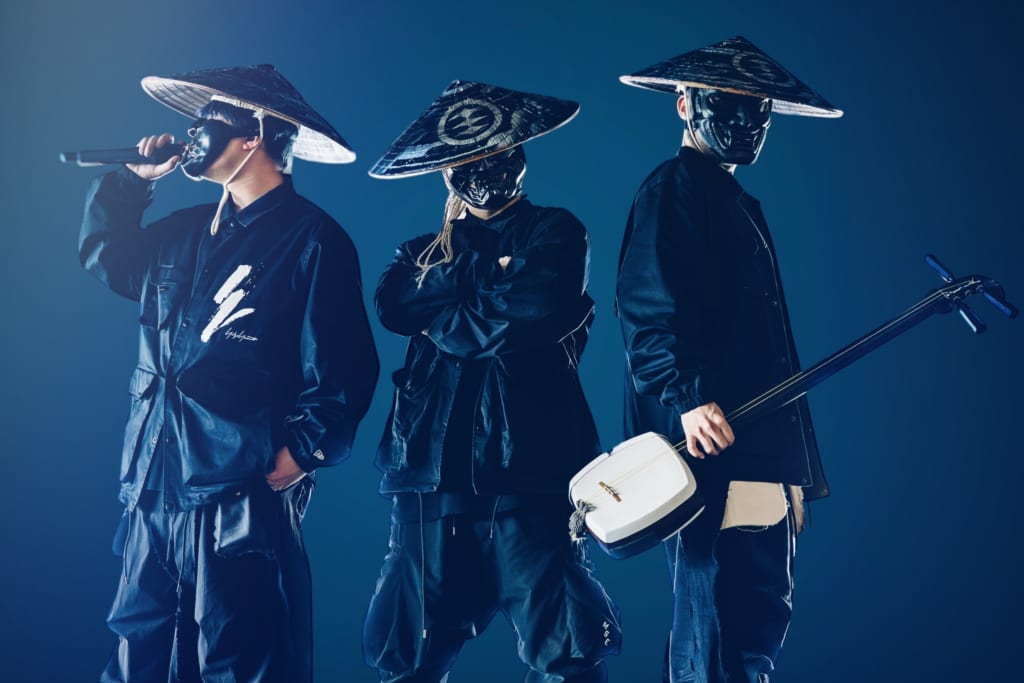
T: 11 years ago, when I was 30, I met Masato Shibata, a Tsugaru shamisen player, through a mutual acquaintance. Even before we played together, I had this strong sense that we clicked. As we kept making sounds together, our relationship grew into one where we could really feel each other’s greatness.
From there, the two of us were active together on and off, but then COVID hit and all our performance venues suddenly disappeared. Around that time, a dancer named FLAVA — a junior of mine — came to me and said, “I want to start something new, can we do it together?” So I said, let’s bring shamisen player Shibata in too and do it as a trio — and that’s how SOME≡LINEZ came to be formed. That was about two and a half years ago.
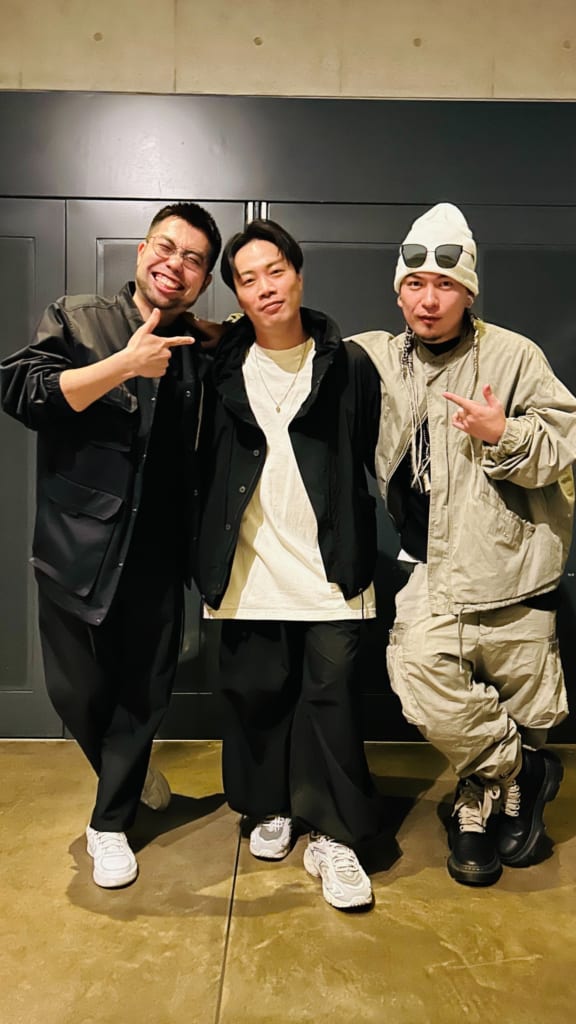
From left: Masato Shibata, TATSUYA, FLAVA
— As TATSUYA the individual, could you tell us the roots of why you’ve poured so much passion into beatbox and expressive activities?
T: When I was around high-school age, I had a dream where I died. It was terrifying — terrifying enough that there was a period where I was mentally pushed to the point of almost being unable to go to school. When I tried to analyze for myself why I felt this way, I found that accepting death itself was surprisingly easy. But I started thinking: once there’s no one left in the world who remembers me 100 years from now, where does the proof of my existence even live? The thought of that disappearing became something I was deeply afraid of.
So I was driven by this impulse of “I have to leave something behind.” I looked into all kinds of things — becoming a film director and leaving works behind, starting an apparel brand — but I couldn’t find the right fit. Then, at 20, when I entered a design vocational school, I happened to come across beatbox. At the time, there were only around 30 people doing it nationwide.
I thought, “if it’s now, there’s a real chance I could become well-known through this,” and that’s what got me started — with zero musical experience. From there, I competed in a world championship at 24, and right after coming back to Japan, I established the general incorporated association Japan Beatbox Association, and began hosting a national competition called the “Japan Beatbox Championship.” That accumulation of experience is what connects to where I am today.
— What meaning is packed into the name “SOME≡LINEZ”?
T: It means “several lines” — the idea that three people who each mastered a different path come together as one. And there’s also that triple-line symbol in the middle, which in math represents “congruence.” That carries the meaning that when you bring several lines together, you get one form of expression that only we can do. And of course, it’s also a play on the word “samurai” (laughs).
— On TikTok, you reportedly broke 100,000 followers in six months. How did you feel about that response?
T: Honestly, I didn’t feel much pressure. We launched on TikTok and Instagram simultaneously, and we’d decided that until one of them passed 100,000 followers, we wouldn’t even say we were active under our personal accounts.
Our target was 100,000, so the feeling was more like “we at least need to hit that number.” But rather than pressure, what I felt more was an expectation of “we’ll probably get there faster and go further than that.” I had a lot of confidence in SOME≡LINEZ as a team.
— At first, you were active without revealing who the members actually were. What was the intention behind that?
T: It was partly a fairly experimental challenge, and partly something planned. On one side, there’s the fact that we’d each built up skills and track records in our respective genres — for example, the risk of just being evaluated as “TATSUYA the beatboxer.” We wanted to flatten that once and see how much the world would evaluate us based purely on the three of us’s skill, presentation, and mode of expression. On the other side, honestly, there was also a bit of “it’d be embarrassing if this didn’t take off” (laughs).
— Within the industry, people can apparently tell who it is just by hearing the sound, right?
T: Exactly. The beatbox scene is small, so people who know how to listen apparently figured it out right away. After we went public, we got reactions like “I knew it was you!” (laughs). But we’d decided we wouldn’t make a big public announcement until we passed 100,000 followers, so up until then, I feel like we really got evaluated purely on our skill alone.
The perfect balance the three of us pursue between “coolness” and “accessibility.”
— It’s also distinctive that the group doesn’t have a clearly designated leader. Why is that?
T: Each of us ends up exercising leadership in different areas. For the enka and traditional Japanese instrument industry side, Masato Shibata takes the lead; for social media output, FLAVA takes the lead; and I handle other operational tasks — there’s a balance to it. We deliberately don’t decide on a leader, and instead value having all three of us on equal footing, united by the shared understanding of doing it “for SOME≡LINEZ.”
There’s also the aspect of respecting each other’s culture and not ranking one above another.
— With members from such different backgrounds, how did you go about unifying the team’s mindset?
T: Honestly, we’ve barely done any work to “unify” our mindset. Each of us has pride from having stood at the forefront of our own genre, so respect for each other’s specialty arises naturally. If anything, because we’re aligned on the shared purpose of “doing it for SOME≡LINEZ,” each of us can move independently without needing to hash out every detail. I think that relationship is what feels comfortable.
— When it comes to fusing the different genres of Tsugaru shamisen, beatbox, and street dance, what do you focus on most?
T: What I feel we always have to value is the balance between “coolness” and “accessibility.” If you lean too hard into coolness, it stops getting across and ironically ends up looking uncool. But if it’s too easy to understand, it becomes overly catchy instead. Since this isn’t a mainstream discipline like soccer, there are people who know about it and people who don’t, and aiming to satisfy both is an incredibly difficult line to walk — so we pay a lot of attention to that sense of balance.
— Were there any struggles during the practice or production stages?
T: The thing I felt was most important was whether we could create original music. Most performers basically perform to songs by famous artists, right? But I had this sense that unless we pursue how far we can take the sound itself as original and fuse that with the performance, there’s no future for the performer industry. Both visually and musically, we place huge importance on whether something is original, even above raw quality.
— Your performances and videos also incorporate elements of art and design. Could you tell us about your approach there?
T: I’m always thinking that “we have to create performances that leave room — margin.” That was true even back when I was just doing beatbox — keeping things in a state that’s easy to collaborate on, easy for someone to do something with, is really important. If it’s too “finished,” that’s no good. Collaborating with rappers, collaborating with singers, collaborating with other dancers — we’re always conscious of maintaining a package that’s easy to collaborate with in various ways. I think that’s part of what makes the three of us such a well-balanced formation.
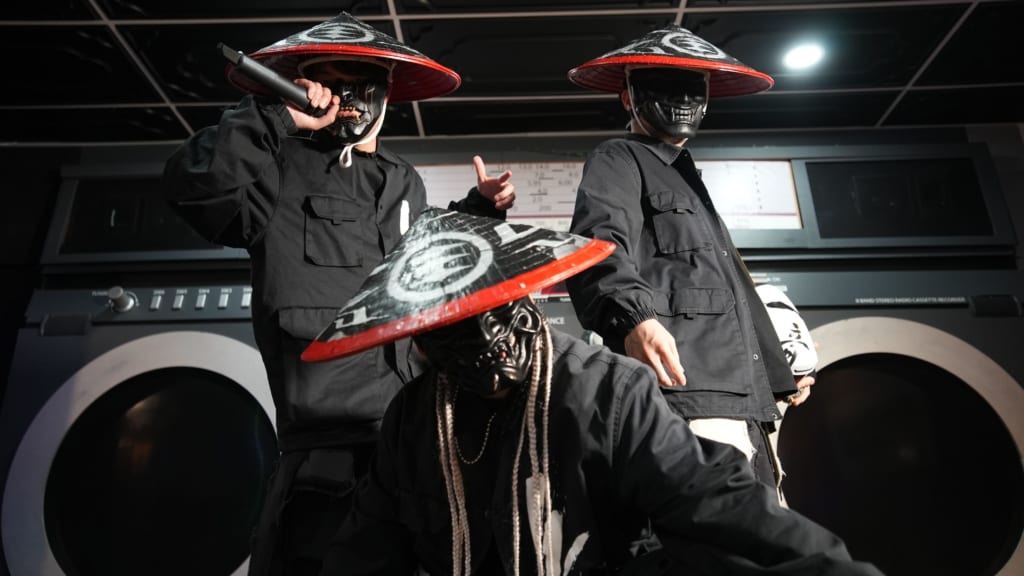
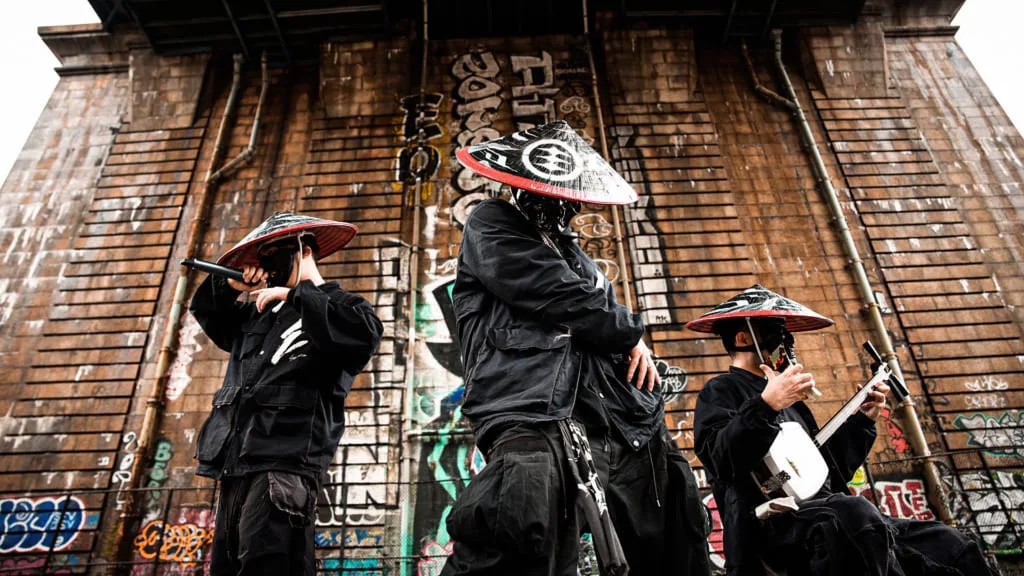
Visually speaking, I think some people might see it as a kind of cosplay themed around “wa” (Japanese tradition), but we’re deliberately diving into that concern head-on. Fundamentally, what we want to do comes down to this: how do we get the world to know about the strength of being Japanese, and about Tsugaru shamisen as a weapon. The style we have now is the result of taking the form that’s easiest to convey to the people we most want to reach.
The Power of “Wa” Recognized by Hip-Hop’s Holy Land — The Response from the Genre’s Home Turf, and the Core Principle SOME≡LINEZ Won’t Compromise On
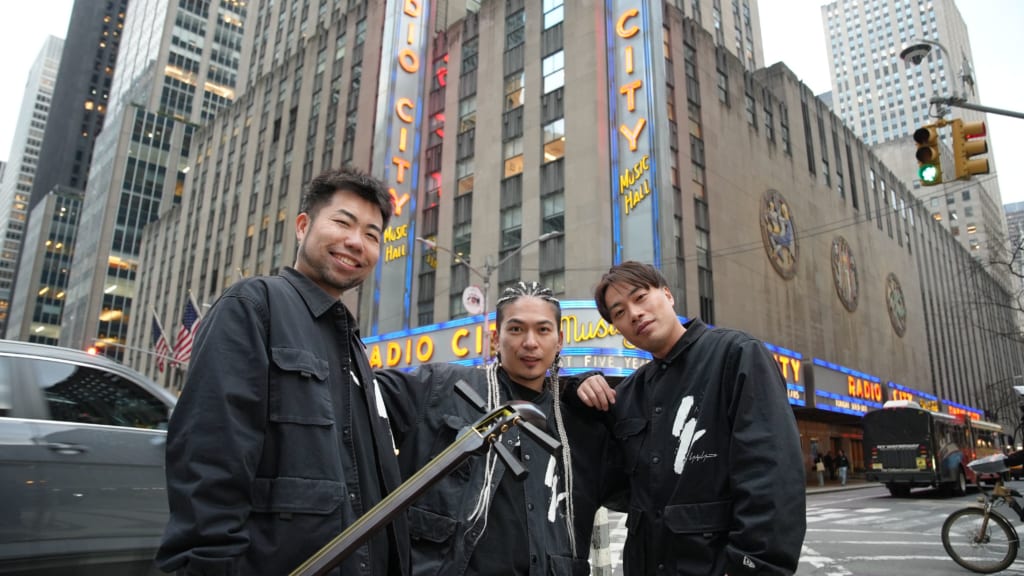
— Your recent collaboration with New York’s Hip-Hop Museum (THHM), hip-hop’s holy land, became a huge topic. How was the reaction on the ground there?
T: First off, I came away with a much stronger sense that the way we’ve been sending out art, music, and fashion — the things we’ve valued as part of hip-hop culture — in a new style was properly recognized. For example, Wu-Tang Clan’s Method Man has posted videos about us around seven times now, saying things like “there’s a new wind of hip-hop blowing out of Japan.” On top of that, our content ended up being donated to and displayed at the Hip-Hop Museum. It proved that what we’ve been doing got through to the very core of hip-hop, and that was a huge relief — honestly, I was incredibly happy.
— Is there a difference between that kind of overseas response and the reaction within Japan?
T: In Japan, at first, when we got to appear at concerts and festivals, there was a bit of a “novelty act” treatment, like “huh, some weird group showed up” (laughs). But once people actually watch the performance, it seems to hit them pretty hard, and I get the sense that fans are gradually increasing in Japan too.
Most recently, we collaborated with Takashi Hosokawa in the enka/kayokyoku category at MUSIC AWARDS JAPAN 2026 — a pretty unusual combination compared to our usual hip-hop context. I think it’ll end up being one of the more memorable moments in SOME≡LINEZ’s activities going forward.
— I hear live shows get a distinctive kind of response too — could you tell me about that?
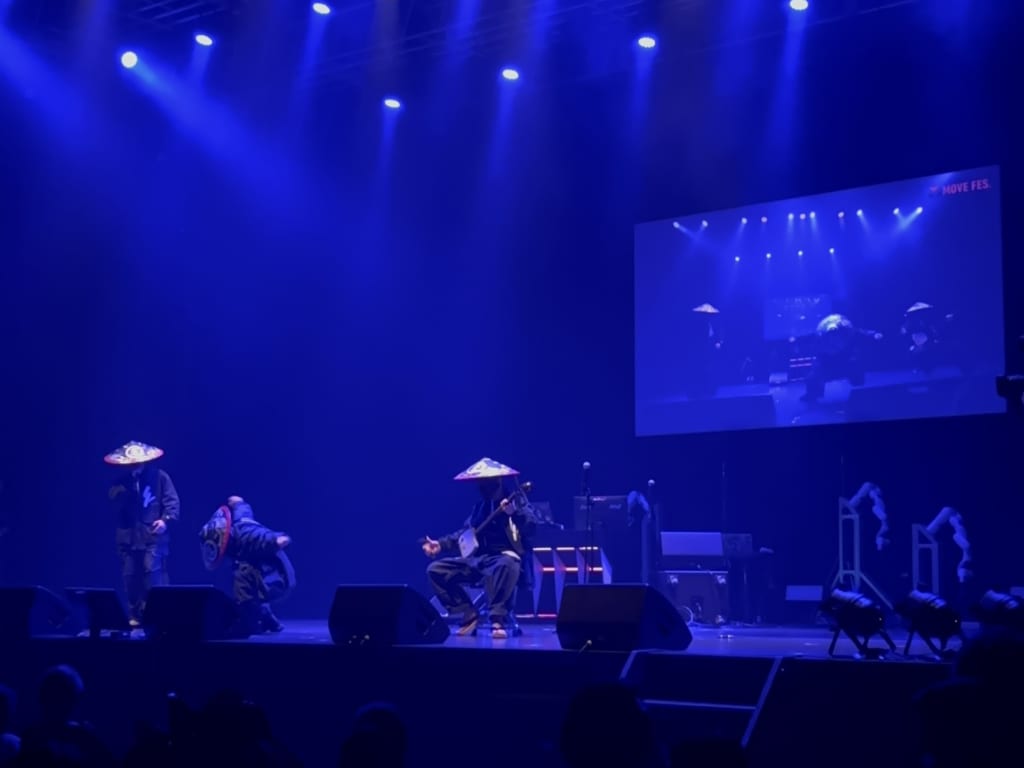
T: For content we make for social media, we wear masks and use umbrellas, but at live shows, they get too much in the way, so we end up taking them off partway through (laughs). It’s hard for me to do beatbox with a mask on anyway. And once we take them off, the MC talk gets really chatty, so the audience is like, “wow, you guys are actually this funny!” (laughs). We’re getting more and more praise that includes the MC segments too, and I feel like we’re pulling off a kind of live show that’s distinctly Japanese.
— While gaining passionate support from underground cultures like hip-hop, you’re also keeping an approach to the mass market — including Japanese terrestrial TV — in view. Within that, is there a core principle SOME≡LINEZ absolutely won’t compromise on?
T: Fundamentally, what we want to do is get the world to know about the strength of being Japanese and about Tsugaru shamisen as a weapon. We want to keep that core principle unshaken. Rather than tailoring ourselves to foreign audiences, we arrived at our current style because we take the approach of “taking the form that’s easiest to convey to the people we want to reach.” As long as that core doesn’t waver, I think the shape can change in all kinds of ways.
— Regarding the one-of-a-kind originality that comes from introducing Japanese-ness, how do you feel about the disruptive power and potential of this “wa” (Japanese) element as you face overseas players and audiences?
T: Lately, when I look at social media, all kinds of things are popping up — performers wearing armor, stuff using technology — but overall I get the impression that they haven’t grasped the essence of it. Can it actually be shown as a live performance, or is it just made for looking good on social media? Is it truly the image of Japan that overseas audiences want, or is it just what they themselves think of as “Japan” and are presenting as such? My sense is that a lot of it isn’t calculated on that front. We’ve thoroughly analyzed that point and built what we do on it, and I think that’s exactly why we’ve been able to get this far.
“Culture is only born once it links with society.” The landscape SOME≡LINEZ wants to show the next generation.
— Your profile states goals like “expanding new possibilities for performers” and “facing regions and society head-on, aiming to build new frameworks.” What specific activities are you thinking of?
T: First, I feel we need to properly raise our name recognition and hold real influence, so we’re continuing our current activities with that in mind — but ultimately, unless it links to what we can do for society, what kind of impact we can have, I don’t think it counts as “culture.” I don’t really hold the view that it’s fine to just make cool things while keeping society at arm’s length.
For example, creating a world where people with disabilities can achieve the kind of things we do, or conveying the appeal of traditional Japanese instruments, or conveying the appeal of Japanese-ness — I want to keep acting while always thinking about what we can do on that front.
— How do you want to convey and spread the culture of traditional Japanese instruments, starting with shamisen, through SOME≡LINEZ?
T: My impression is that global awareness of traditional Japanese instruments, starting with Tsugaru shamisen, is still not very high. It’s the same as us — if you asked whether we’re knowledgeable about other countries’ traditional folk instruments, we couldn’t really say “Yes!” either (laughs). But I do think there are things we can do. By pairing it with beatbox, it suddenly resonates with people who otherwise had no interest in Tsugaru shamisen — I think that’s one of SOME≡LINEZ’s real possibilities.
Even in the sense of preserving culture, I think SOME≡LINEZ functions really well as a way to convey it in a new, cool form that crosses every boundary — nationality, age, language, and so on.
Actually, we have a pretty detailed plan in place, but there are parts I still can’t talk about this time (laughs). But first, I want to build up our name recognition to the point where people around the world would say, “when it comes to performers who incorporate ‘wa,’ it’s SOME≡LINEZ” — recognition in the top five. Without that, the things we want to achieve become difficult, so right now we just want to keep building influence.
— Each member has a background of being active on the world stage. Through SOME≡LINEZ, what kind of landscape do you want to show the next generation of players?
T: I want to keep exploring how to coexist with society, while conveying the appeal of traditional Japanese instruments and of Japanese-ness — and I want to show that kind of existence as a performer. Beatbox itself — there used to be only 30 people doing it in Japan, and now it’s really spread, right? I believe the same thing is possible in the traditional Japanese instrument industry today, and actually embodying that ourselves, I think, becomes the message to the next generation.
— Finally, please give a message to FINEPLAY’s readers and to street players both in Japan and overseas who are reading this article.
T: First, I want people to find, faster than anyone else, the thing only they can do — the position only they can occupy. Continuing to pursue that becomes your place to belong, and it also connects to your sense of purpose. In any industry, that kind of position should exist for anyone. I think the most important thing is to first search for it, regardless of whether it’s big or small.
TATSUYA Profile

Human Beatbox Japan & International Champion. Started beatbox at age 20, and by 2009 was performing internationally, including appearances in London, Germany, and at the Apollo Theater in New York.
At the Japan Beatbox Championship, the tournament to determine Japan’s top beatboxer, he is the only person in Japan to have won four years in a row, combining solo and team titles. In 2014, at LA CUP held in France, he became the first Japanese to place 4th in the world. In 2016, he became the first Japanese to win the international competition held in Singapore. He has also appeared as a special guest at Momoiro Clover Z concerts and at Disney on Classic.
Amid his international activities, driven by a desire to energize Japan’s beatbox scene, he established the general incorporated association Japan Human Beatbox Association in June 2010. He currently runs tentoTen Co., Ltd., based in Koriyama City, Fukushima Prefecture, and is active primarily across Tokyo, Fukushima, and Shizuoka.
SOME≡LINEZ Profile
Japan’s traditional instrument, the “Tsugaru shamisen.”
“Human beatbox” and “street dance,” born from street culture.
“Art & design,” which visually expresses a distinct worldview.A one-of-a-kind performance team in the world, formed by combining several different elements.In roughly two and a half years since forming, their total social media following has surpassed 900,000.A new-era art and entertainment where Japanese tradition and contemporary street culture intersect.